Friday, April 10, 2009

Easter Eggs and Ham

This story goes along with the "Can you eat colored Easter Eggs from earlier this week." IT says you can leave the eggs out for 2 hours, but a doctor told me he wouldn't let them sit out for more than an hour.

FROM CNN:Do you like Easter eggs and ham? Here's how to handle them safely.

Easter brunches and dinners shouldn't lead to food-borne illness. As we tell you in today's Health Watch, some simple safety tips can keep eggs and ham from turning you green.

Like to dye eggs? You know, it takes a delicate touch to handle these fragile foods. But here's something else to think about. Eggs can carry bacteria, like Salmonella, so you need to take precautions.

Keep eggs refrigerated. Wash your hands regularly when handling eggs. Use only food-grade dyes to decorate. Once they're hard boiled, color and then refrigerate. If you need to display them, don't leave them out for more than two hours.

Never eat a cracked or dirty egg. And if you hide them, keep them out of reach of animals and pets and make sure the lawn you place them in is not treated with chemicals. And if you are cooking a ham for the holidays, make sure you cook it long enough to avoid food-borne illnesses.

Set oven temperature to 325 0F. Both cook-before-eating cured and fresh hams should be cooked to 160 0F. Reheat cooked hams packaged in USDA-inspected plants to 140 0F and all others to 165 0F.

Items like spiral-cut cooked ham and vacuum-packed and canned hams can be eaten cold.

-NewsAnchorMom Jen

Afraid to wear shorts? Do you have unwanted hair? Embarrassed by unsightly varicose or spider veins? NOW is the time to get your legs ready for summer! You don’t have to be afraid to wear shorts because of unwanted hair or unsightly varicose or spider veins.

Call 674-SKIN to schedule your FREE leg vein or hair laser consultation at Soderstrom Skin Institute, and you’ll be ready to show off your beautiful legs this summer! Soderstrom Skin Institute is positioned to be a comprehensive, full service, skin care facility. Visit www.soderstromskininstitute.com to learn what Soderstrom Skin Institute can do for you.

Thursday, April 9, 2009

Come see the Easter Bunny!

I am headed to see the Easter Bunny on Saturday at the Tot Spot in Peoria. It's on the corner of Radnor and Willow Knolls. The owner Tracy had a similar event for Christmas and it was great. Santa and Mrs. Claus were there-no lines and no fee. Plus, I got to shop while my son talked to Santa. It was nice. I am curious to see if my two-year old will be scared of the Easter Bunny. Hopefully I will get at least one picture without tears!

-NewsAnchorMom Jen

Afraid to wear shorts? Do you have unwanted hair? Embarrassed by unsightly varicose or spider veins? NOW is the time to get your legs ready for summer! You don’t have to be afraid to wear shorts because of unwanted hair or unsightly varicose or spider veins. Call 674-SKIN to schedule your FREE leg vein or hair laser consultation at Soderstrom Skin Institute, and you’ll be ready to show off your beautiful legs this summer!

Soderstrom Skin Institute is positioned to be a comprehensive, full service, skin care facility. Visit www.soderstromskininstitute.com to learn what Soderstrom Skin Institute can do for you.

Wednesday, April 8, 2009

Effects of Thumb/Pacifier Sucking


Oh My! You should read this if you have little ones!

FROM ABC:

Dr. Mario Vilardi was interviewed about the long term effects of kids sucking their thumbs or sucking on a pacifier. He says it is normal for kids to get pleasure and comfort from the sucking reflex. It is not something a parent should be alarmed by or bothered by when the child is an infant.

Key Points of the interview:
1. If the child is sucking vigorously and really using a lot of muscles during the process as opposed to gently making the sucking motion, there is more likely to be a problem down the road.

2. American Academy of Pediatric Dentistry says to stop the thumb sucking/pacifier at 3 years old generally to prevent future teeth problems.

3. Most kids stop on their own by 4 years old.

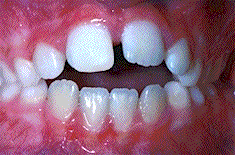
4. Thumb/pacifier sucking can mold the jaws and change a tooth position, it can make the palate very narrow. The upper teeth will move out a little bit and the lower teeth will tilt in. That creates an open bite where the teeth don't meet.

5. For some kids the damage can be reversed. For others, it is permanent.

6. It is easier to take away a pacifier than to try and get a child to stop sucking his/her thumb. Dentists recommend trying to give a thumb sucker a pacifier instead before 1 year old.
Recommendations for getting a child to stop sucking the thumb:

1. Don't use icky tasting syrup on the thumb.
2. Try giving the child rewards if they can go ? long without sucking their thumb. The time would depend on how often the child normally does this.

As you may know, I am having another baby in September. My first did have a binky (for wayyyy tooo long I might add!) My second wanted nothing to do with those silly things and he never sucked his thumb. Whew! So do I try not to give the new baby a pacifier or do I just see whether he/she takes it? If you have a pacifier child, you know how hard it is to get that thing away from the child once they start using it. It took me a good year with my first child! I don't think my son's teeth were impacted by the binky, but his speech therapist says it may have slowed his vocal development. We took it away at 3 yrs old and it was very difficult!

Did your child suck their thumb or use a pacifier? Did it impact his/her teeth?


-NewsAnchorMom Jen

Afraid to wear shorts? Do you have unwanted hair? Embarrassed by unsightly varicose or spider veins? NOW is the time to get your legs ready for summer! You don’t have to be afraid to wear shorts because of unwanted hair or unsightly varicose or spider veins. Call 674-SKIN to schedule your FREE leg vein or hair laser consultation at Soderstrom Skin Institute, and you’ll be ready to show off your beautiful legs this summer!

Soderstrom Skin Institute is positioned to be a comprehensive, full service, skin care facility. Visit www.soderstromskininstitute.com to learn what Soderstrom Skin Institute can do for you.

8 Challenges of Autism Today

FROM MSN:
1. Behavior

Facing facts: Science has established that autism is a developmental brain disorder, but experts have not yet been able to pinpoint why the behavioral outbursts associated with this disorder occur, says Richard Foxx, Ph.D. Foxx is professor of psychology at Penn State University, an adjunct professor of pediatrics at Penn State College of Medicine, and co-editor of Making a Difference: Behavioral Intervention for Autism (Pro-Ed, 2001). What experts do agree on is that these behaviors—which may include tantrums, self-injury and aggressiveness—are learned, says Foxx, whose specialty is treating behavioral problems in people who have autism. The behavior, he says, is a way for a child with autism to communicate the need for attention or to escape from an undesirable situation.

What to do: Foxx suggests parents enlist the services of a board-certified behavior analyst who can help assess the motivation behind the disruptive behavior. (You can find one at http://www.bacb.com/.) For example, he says, a child may have a strong negative reaction to taking a bath and will throw a tantrum whenever asked to take one. However, a behavior analyst might determine that the child was watching a favorite DVD when asked to take a bath, and was expressing frustration over being interrupted. Possible solutions might be to schedule the bath at a different time, and then, using positive reinforcement, letting the child watch that DVD.

If parents cannot afford a private behavior analyst, Foxx suggests requesting one through the school district or a mental health organization.

2.Vaccination

Facing facts: Some parents believe the vaccine that protects against measles, mumps and rubella (MMR) has caused the spike in autism. There's a reason why it's easy to connect the two events, says Tracey Oppenheim, M.D., a child psychiatrist who specializes in treating children with autism at Banner Children's Hospital at Banner Desert Medical Center in Mesa, Ariz.

Oppenheim says autism symptoms usually appear when a child is between 18 months and 3 years of age. Most children who are eventually diagnosed as having autism initially show gradual abnormal development. However, others appear to be developmentally on track, and then suddenly undergo behavioral changes and lose language skills. "This abrupt turn of events can make parents desperate to figure out what happened to their child," says Oppenheim. "And, if the child was vaccinated during this time, some parents tend to connect the vaccine and the onset of autism because of this coincidental timing." Sometimes, says Oppenheim, some of these parents, either first-timers or those who already have an older child who has autism, therefore decide not to vaccinate their children.

What to do: Parents needn't worry about vaccines, says Oppenheim. Experts at the Center for Disease Control and Prevention (www.cdc.gov), and at the American Academy of Pediatrics (aap.org), agree that the MMR vaccine is not responsible for the rise in cases of autism. She advises that parents base their decisions on facts, rather than on fear.

3.Nutrition

Facing facts: Dr. Foxx says food can be a major issue for children with autism, and for their parents who are bombarded with suggestions of different diets to follow, says. Foxx, whose specialty is treating behavioral problems in people who have autism, says these children often choose their foods selectively, sometimes eating only foods of a certain color or items made by a particular brand. They may also gravitate to foods with a soothing texture, such as puddings. And they may fixate on appearance, rejecting items with, say, bits of green in them. To make matters worse, some children with autism have poor chewing skills, or may refuse to eat solid foods.

"Parents are so desperate to help their child that they may seize on less-traditional food regimens," says Foxx, co-author of Treating Eating Problems of Children with Autism Spectrum Disorders: Interventions for Professionals and Parents (Pro-Ed, 2007). Some popular but highly controversial food interventions, he says, include gluten-free or dairy-free diets. "The danger is taking a one-size-fits-all approach," he says. "Autism is a complex disorder, and a well-balanced diet is always best for a child."

What to do: If you're concerned about your child's nutrition, it's best to enlist a licensed and certified professional, preferably one associated with a medical school, to do a full work-up on your child. Many parents have had success broadening their child's palate through behavioral methods, such as putting a tiny amount of a rejected food into a child's favorite food, and gradually increasing the amount. Children can also learn to broaden their palates by working with an occupational therapist.


4. Early Screening


Facing facts: Why is early screening for autism so important? The earlier it can be determined that a child has autism, the sooner he or she can get intervention, says Matt Tincani, Ph.D., an expert on autism disorders and associate professor of special education at Temple University's College of Education. And the sooner they get intervention, the more likely these children can make progress.

The first step in getting a handle on the condition, then, is a screening, says Tincani, who's also the co-editor of Complete Guide to Autism Spectrum Disorders (Prufrock Press Inc., 2009). The results of some screenings are tip-offs that more specialized tests are needed, he says, just as if you had a positive screen for high blood pressure and were sent for further tests to see if you have heart problems. Despite the value of these screenings, it's not always easy for parents, who suspect something is not right developmentally with their child, to get one.

What to do: Tincani says pediatricians are not always very experienced treating and diagnosing autism and other developmental disorders, and may tell parents that the child will outgrow the concerning behaviors. Therefore, parents who want a screening for their child should be adamant and ask the physician for a referral to a pediatric neurologist, or to another professional who understands autism. Because the screening results can lead to early intervention, it pays to be persistent, he says. It's also imperative to get treatment early because in some states, insurance companies cover specific therapies only until the child reaches age 7, after which time payment must be made out of pocket.


5.Sibling issues


Facing facts: A child who has autism requires enormous attention from everyone in the family, says Dr. Foxx. And the strain is acutely felt by the child's siblings. "A large percentage of parents' time is tied up in caring for the safety and welfare of their [child with autism], so parents are not able to give as much time as they'd like to typical siblings," he says. "It's an arduous balancing act," he adds.

What to do: Be upfront and honest with your other children about why the sibling with autism needs extra care, says Foxx, noting that siblings are capable of great patience and understanding in this type of situation. Often, siblings feel appreciated and respected if the parent asks them for help in caring for the sister or brother who has autism, but it's important to not overburden them with responsibilities.


6. School placement


Facing facts: A child's mental and emotional health is often tied to a successful school experience. For children with autism, the right placement plays a key role. For the best outcome, parents of children with autism need to be well informed about how classroom placement occurs, says Dr. Tincani. The good news is the law—The Individuals with Disabilities Education Improvement Act of 2004 (IDEA)—is on your side.

IDEA states that parents are equal members of the child's educational team, and that the only reason for removing the child from a traditional classroom setting is if the youngster is not making satisfactory progress there. However, many schools act not in the interest of the child, but according to the preferences of teachers who may not want behavioral disruptions in their classroom, says Dr. Tincani.

What to do: Be realistic about your child's abilities, but don't give in to pressure, he advises. "If you're considering a self-contained classroom setting—where a [child with autism] receives more intensive instruction in basic skills—insist on seeing the classroom. It may be a red flag for parents if, for example, their child is verbal and expressive, and most of the children in the classroom appear secluded and withdrawn. Another alternative, if the child can handle such a transition, is splitting the school day between traditional and self-contained classroom instruction.

7. Getting informed

Facing facts: The challenge facing parents seeking information about autism is that there's so much of it. "People are overwhelmed and frustrated with all the information that's out there," says Areva Martin, an attorney in private practice in Los Angeles and the mother of a 10-year-old son with autism. That's the reason she co-founded Special Needs Network, a non-profit organization that provides resources, education and advocacy to families raising children with disabilities in underserved communities (http://www.specialneedsnetwork.net/); she's now president of the organization. And, she adds, because autism expresses itself differently in every child, only a small percentage of the vast amount of information online may be applicable to your child's situation. However, says Martin, many parents are so desperate for answers that they can easily be misled.

What to do: Find a trusted source of information, such as a family doctor, educator or mental health professional, to help you sort out what may be contradictory information, says Martin. While it's important to keep up with the latest studies, she underscores that "collecting information is only a part of the puzzle." Getting the information interpreted, so that it helps your child and provides new options, is just as crucial.

What do you think is the biggest challenge when it comes to autism? I don't have a child with the developmental disorder, but I would think discipline would be an everyday battle. When do you blow off bad behavior as a symptom and when is the child acting out and needing to be disciplined? Is it always easy to tell the difference? I think discipline is so hard for any parent. It is exhausting and if you start slacking, it just gets worse! Thanks for sending the this article Lauryn!

-NewsAnchorMom Jen

Afraid to wear shorts? Do you have unwanted hair? Embarrassed by unsightly varicose or spider veins? NOW is the time to get your legs ready for summer! You don’t have to be afraid to wear shorts because of unwanted hair or unsightly varicose or spider veins. Call 674-SKIN to schedule your FREE leg vein or hair laser consultation at Soderstrom Skin Institute, and you’ll be ready to show off your beautiful legs this summer!

Soderstrom Skin Institute is positioned to be a comprehensive, full service, skin care facility. Visit www.soderstromskininstitute.com to learn what Soderstrom Skin Institute can do for you.

Monday, April 6, 2009

Snowmen in April?


Take a moment to enjoy this picture. No, I am not the great mom who went outside with my kids to enjoy the last snow of the year. But I did see the mom I wanted to be! I just didn't have the energy! This is my neighbor's house. I love this picture because I took it as the sun was going down and all you can see is the remnants of a fun-filled day. The snowmen look so out of place surrounded by green grass. What a great memory of the winter that seems like it will never end! I sent it to Lee Ranson for a weather picture. I think he plans on using it tonight (Tuesday.)

Did any of you play in the snow on Monday?

-NewsAnchorMom Jen

Afraid to wear shorts? Do you have unwanted hair? Embarrassed by unsightly varicose or spider veins? NOW is the time to get your legs ready for summer! You don’t have to be afraid to wear shorts because of unwanted hair or unsightly varicose or spider veins. Call 674-SKIN to schedule your FREE leg vein or hair laser consultation at Soderstrom Skin Institute, and you’ll be ready to show off your beautiful legs this summer!

Soderstrom Skin Institute is positioned to be a comprehensive, full service, skin care facility. Visit www.soderstromskininstitute.com to learn what Soderstrom Skin Institute can do for you.

Can you eat colored Easter Eggs?

This is a picture explaining why my five-year-old was up late last night. Yes, we colored some festive eggs. He said they were beautiful when we took them out of the food dye. He absolutely loves hard boiled eggs. So now we have a ton of them and I am asking you, "Can we eat the colored eggs?" I assumed they were fine to eat. So I gave him one for breakfast. After taking off the blue shell, we quickly realized the entire egg was blue, not just the shell. This did not look appetizing to me and my son gave me the funniest look (so I am sure he was thinking the same thing.)

Now we have all these beautiful eggs that are pink, orange, blue and yellow all the way through. What is a family to do? According to my friend google, they can be eaten if the dye is non-toxic. I guess I will be digging through the trash looking for the box tonight. Has anyone else had this dilemma? Do you eat your colored hard-boiled eggs? This is kind of a breakfast emergency, so please let me know!

-NewsAnchorMom Jen

Afraid to wear shorts? Do you have unwanted hair? Embarrassed by unsightly varicose or spider veins? NOW is the time to get your legs ready for summer! You don’t have to be afraid to wear shorts because of unwanted hair or unsightly varicose or spider veins. Call 674-SKIN to schedule your FREE leg vein or hair laser consultation at Soderstrom Skin Institute, and you’ll be ready to show off your beautiful legs this summer!

Soderstrom Skin Institute is positioned to be a comprehensive, full service, skin care facility. Visit www.soderstromskininstitute.com to learn what Soderstrom Skin Institute can do for you.

OMG Breastfeeding mix-up!

This sounds like an April Fool's joke, but it's a true story. It is unbelievable! I can't imagine a hospital doing this. What are the odds that there is a mix-up and the mother has a terminal, contagious illness. Unreal!


FROM NBC: A mix-up at a New Hampshire hospital has the parents of a newborn fearing for its life. A nurse at Portsmouth Regional Hospital gave a mother the wrong baby to
breastfeed.

Now the parents of that baby are having it tested for hepatitis and HIV, since both can be transmitted through breastfeeding.

The hospital expressed regret and released this statement: "...We launched a full investigation and are taking steps to avoid a similar event from occurring in the future."

I would love to know the reputation of this hospital. I would guess the baby will be just fine, but I would still be more than furious if I were that baby's parents. We will have to wait and see.

-NewsAnchorMom Jen

Afraid to wear shorts? Do you have unwanted hair? Embarrassed by unsightly varicose or spider veins? NOW is the time to get your legs ready for summer! You don’t have to be afraid to wear shorts because of unwanted hair or unsightly varicose or spider veins. Call 674-SKIN to schedule your FREE leg vein or hair laser consultation at Soderstrom Skin Institute, and you’ll be ready to show off your beautiful legs this summer!
Soderstrom Skin Institute is positioned to be a comprehensive, full service, skin care facility. Visit www.soderstromskininstitute.com to learn what Soderstrom Skin Institute can do for you.

Sunday, April 5, 2009

Financial Help for Special Needs Families

There is a woman in Illinois who helps families of special needs children/adults develop a financial plan for the future. Will your child be able to live independently as an adult? One thing the organization does is discover where your child could potentially live if you passed away. They also look at how to get grants to make that happen and even find resources to help your child get closer to independence. Protected Tomorrows can also help you find the best and most affordable place for an aging parent to live. Children with special needs become adults with special needs and most of the programs stop when the child turns 18 years old. It's a scary reality for a lot of parents. Here's the gist of what Protected Tomorrows does: (I believe the cost depends on what services you end up using, but I am not sure)

Protected Tomorrows, Inc. is an advocacy firm that enhances the lives of people with special needs through a comprehensive life planning process. Our nationwide network of Advocates creates Future Care Plans™, which addresses the needs of the individual with developmental disabilities, mental illness, physical disabilities, or cognitive and neurological diseases in the following areas:

  • education
  • residential
  • financial
  • legal
  • health care
  • government benefits
  • employment
  • recreation
The Future Care Plan is a comprehensive way to approach and address the fears, hopes and dreams of families with a special needs member whether that member has a developmental disability like autism, cerebral palsy, Down syndrome or Angelmans syndrome; mental illness; or other diseases such as Alzheimer’s, Parkinson’s, Lou Gehrig’s (Amyotrophic Lateral Sclerosis), and Multiple Sclerosis.

Here's a story on Protected Tomorrows from ABC7 in Chicago. On a side note, it is so cool to me that the station has a reporter who is hearing impaired doing this story.

ABC7 story

About the Founder of the program: Our founder, Mary Anne Ehlert, CFP, had a successful career in financial planning when she decided to act on her lifelong desire to specialize in serving the families of the disabled. The source of her inspiration was very dear to her heart. Mary Anne herself had come from such a family. Her younger sister, Marcia, to whom she felt especially close, suffered severe mental handicaps due to cerebral palsy. And, although their parents were naturally determined that Marcia should get the best possible care, they had also for years been understandably confused how best to plan and provide for her future, especially financially.

-NewsAnchorMom Jen

Afraid to wear shorts? Do you have unwanted hair? Embarrassed by unsightly varicose or spider veins? NOW is the time to get your legs ready for summer! You don’t have to be afraid to wear shorts because of unwanted hair or unsightly varicose or spider veins. Call 674-SKIN to schedule your FREE leg vein or hair laser consultation at Soderstrom Skin Institute, and you’ll be ready to show off your beautiful legs this summer!

Soderstrom Skin Institute is positioned to be a comprehensive, full service, skin care facility. Visit www.soderstromskininstitute.com to learn what Soderstrom Skin Institute can do for you.

 
Template by lollybloggerdesigns. Design by Taylor Johnston.