Showing posts with label kids and artificial sweeteners. Show all posts

Wednesday, March 30, 2011

Alarming Artificial Food Coloring Concerns


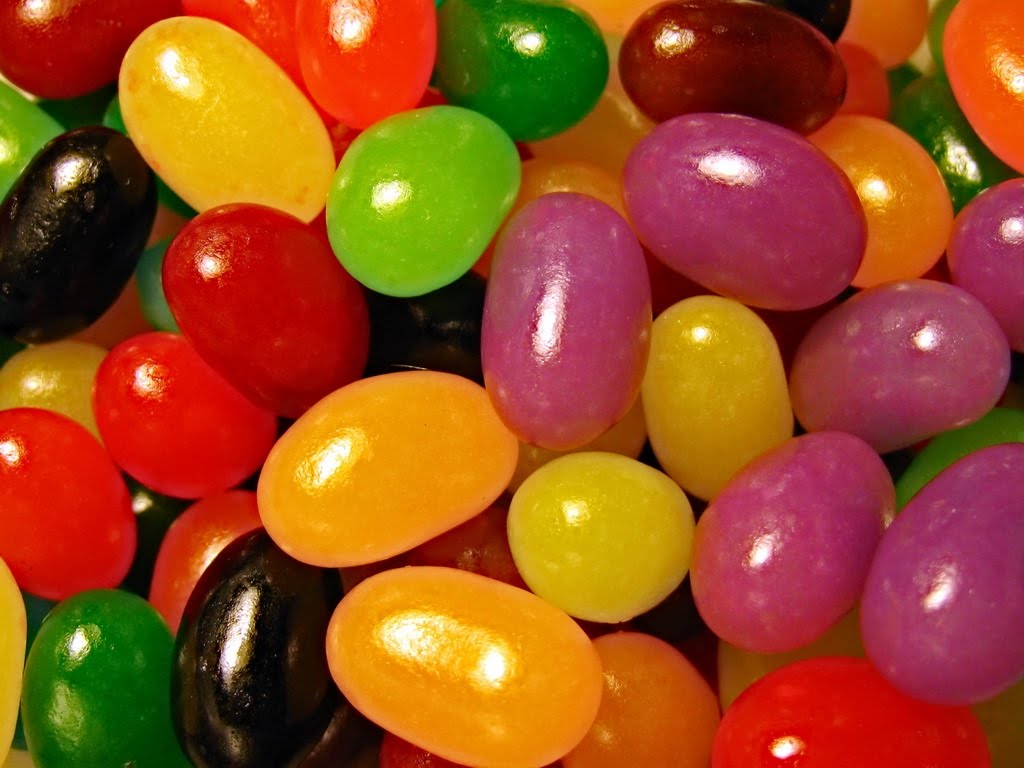
Be careful when you decide what the Easter Bunny is hiding in those baskets this year!

I feel like an idiot because I thought red 40 was illegal. Geez! I need to read more labels. The FDA is looking at whether that icky food coloring causes behavioral problems in kids. Some parents and doctors say it does and that is an alarming thought. As far as I know, the only purpose of the dye is to make food look more appealing to get people to buy it. I have never heard of it being necessary or having any nutritional value. So, my vote is to get rid of it. Why should we be feeding ourselves extra chemicals to make the food look pretty? It seems absurd.

FROM NBC: Advisors to the Food and Drug Administration have begun a two-day meeting to discuss the science behind artificial colors in food -- and whether they lead to hyperactivity in children. "All right, wanna taste it first?" This is what a fruit smoothie looks like when the coloring comes from mother nature.

There's nothing in Jackie Jackson Vann's kitchen that's made with artificial colors-a change the Washington D.C. mother made when her son started showing signs of Attention Deficit Hyperactivity Disorder.
Jackie Jackson Vann - Mother: "In 2 weeks I could tell a difference in my children -- in their handwriting, in their focus, doing homework." Now the Food and Drug Administration is looking at cases like the Vann's and discussing whether 8 dyes, including red 40 and yellow 5, are in fact linked to behavioral issues in children.

The meetings were prompted by a petition from the consumer watch-dog group, Center for Science in The Public Interest. Executive Director Michael Jacobson says artificial dyes appear to enhance hyperactivity in kids already prone to it.
Michael Jacobson/Center for Science in the Public Interest: "Getting rid of food dyes is not going to solve the hyperactivity or attention deficit disorder problem. But it would reduce the problem."

The FDA advisors will look at whether the problem was reduced in Great Britain -- after food manufacturers were asked to get rid of several artificial colors. Most companies did -- for example these strawberry bars purchased in the UK are made with paprika extract for color. In the U.S., the same product was made with red 40.


The grocery manufacturers of America issued a statement saying there's no clear link between artificial food colors and hyperactivity among children and that "...we are always producing the safest possible product for our consumers."
Experts say the use of artificial colors in the U.S. has increased by half in the past 20 years, and a fresh look at their effect is overdue.

Dr. Laura Anderko/Georgetown University: "The regulation hasn't kept up with our consuming habits." "Do you want, um, butter on it?" The Vanns still enjoy the basic kid staples like peanut butter and jelly -- their consuming habits now simply include a lot of label reading. Frito-Lay recently announced it will switch to using natural colors -- like beets and carrots -- in half of its snacks by the end of the year. The FDA advisors are expected to issue recommendations on food dyes by Thursday afternoon.

-NewsAnchorMom Jen

Skin Dimensions SB products, exclusive to Soderstrom Skin Institute, are manufactured with Pharmaceutical-Grade ingredients. In addition to being "Feel Good Products," they contain unique and innovative ingredients in concentrations that can assist you in the achievement of your own personal skin care objectives. This product line contains higher percentages of Glycolic, Vitamin A, C, E, Co-Q10, green tea, than what you can purchase over the counter.

Monday, June 14, 2010

Hiding Artificial Food Dyes


The UK is taking extra steps to get artificial food dyes out of products, but the U.S. is not complying. Companies who sell to both countries are actually changing the ingredients for the UK and leaving the unnatural chemicals in the U.S. versions of the same food! This infuriates me. We know the dyes have no benefit and they may cause harm. Why in the world are they in food? Because the food coloring makes them look more appetizing. Isn't that disgusting! I would love to eat more naturally and never have processed food in my house. I just can't take that on right now. It's too expensive and too stressful. I just buy a lot of fresh fruit and try to avoid the processed stuff as much as possible. I wish the artificial dyes would just get banned in the U.S.

FROM NBC: Your child eats some rainbow-colored candy and there's a good chance he or she will soon be bouncing off the walls. Is the sugar to blame? or the stuff that gives the candy its bright color? Starting this year, food manufacturers in Britain have been asked to get artificial dyes out of their products. Health and safety officials there say it's because some of these chemicals could be causing behavioral problems in kids.

Beth Tribble/Mother "Michael would get easily frustrated. He would cry. He would get horrible headaches. He would throw up." Like a lot of kids his age, michael tribble enjoyed candy, orange crackers, sweet yogurt and pudding. but his mother noticed that after he ate these brightly colored foods, his behavior would change.
Beth Tribble/Mother: "I think a lot of the behavioral issues that parents are seeing is a direct result of the additives." Specifically she's talking about artificial food dye, used in thousands of foods. things like yellow 6, used to make waffles a golden yellow and blue1 and red 40. used to give these yogurts their blue and pink hues."

Michael Jacobson/CSPI: "It's not that the food dyes are the underlying cause of ADHD or hyperactivity but if a kid is predisposed to it then the dyes can trigger outbursts and behavioral outbursts." Michael Jacobson is the executive director of the center for science in the public interest. he says research dating back to 1980 has linked food dyes with behavioral problems in children.
Michael Jacobson / CSPI: "Some children, certainly not all children, react sharply. They ... lose control over their impulses. Physically, they jump around, they might yell, scream out."

A 2007 study by the uk's food standards agency, the British equivalent of the Food and Drug Administration, found that 8 and 9 year olds who drank beverages with food dyes were more likely to become hyperactive.
Those findings prompted the agency to ask food manufacturers to get rid of six artificial colors in British foods by the end of 2009. Jacobson says most companies have complied, but they haven't made changes to their U.S. products.

For example, these strawberry Nutrigrain bars purchased in the U.S. are made with red 40, but the same strawberry snack in the UK uses paprika extract for color.
Michael Jacobson / CSPI: "The foods would automatically be safer for kids and that really should be the bottom line." The FDA maintains that there isn't enough data to conclusively link these dyes with hyperactivity in children. a statement on the agency's web site says they reviewed the british study and found it does "not substantiate a link between color additives that were tested and behavioral effects." But for the Tribble family, they say getting the dyes out of their foods has made a big difference.

Beth Tribble / Mother: "He's more focused, he has more confidence. His handwriting is significantly improved. He can stay on task a whole lot better, but I think the biggest improvement is that he feels a whole better about himself." There is still a lot of controversy over this issue and the FDA maintains these dyes are safe.
But some experts still feel that kids who might be predisposed to behavioral problems could be more sensitive to artificial food dyes.

In the USA, the following seven artificial colorings are permitted in food (the most common in bold) as of 2007:


-NewsAnchorMom Jen

What if you could look younger? Soderstrom Skin Institute was one of the first medical facilities to offer laser services in Central Illinois 20 years ago and today provides one of the most comprehensive laser treatment programs available. Call 674-7546 to schedule your FREE CONSULTATION today!

Saturday, August 16, 2008

Splenda goes to court

What is Splenda? Is it an artificial sweetener or does it have some natural qualities? If you aren't sure of the right answer, you're not alone. It seems consumers are confused about what Splenda is and they are buying it because they think it is healthier than other no calorie sweeteners. With childhood obesity on the rise, kids are being impacted by this.

This is an interesting little tidbit from Beverage.com:

The date is finally set for a landmark court case between in the US-based Sugar Association and Johnson & Johnson over the marketing of its Splenda sweetener. District Court judge Dale Fischer said the long awaited trial, which relates to allegations that McNeil Nutritionals, a subsidiary of Johnson & Johnson, had misleadingly marketed Splenda as a natural product, will commence on 6 January 2009.

The case could bring an end to a long-standing dispute between McNeil and the trade body, which claims that Splenda’s tag line - 'Made from sugar so it tastes like sugar' - is deliberately being used to make consumers believe that the artificial sweetener contains sugar.

The Sugar Association therefore maintains that the claims show a deliberate attempt to misinform consumers into believing that Splenda is a no-calorie natural sugar product.

However, McNeil continues to refute the allegations, claiming that all material supplied to customers regarding its man-made sweetener are not misleading or deceptive.
“Splenda Brand Sweetener (
sucralose) is made from a process that begins with sugar,” the company stated. “In fact, 10 tons of sugar are used every day to make Splenda.”

The ingredients maker claims that it promotes the product as a lower calorie alternative to sugar to tap into concerns over increased obesity rates and other health issues. According to the manufacturer, this distinction has helped the product to become the US’ biggest selling zero calorie sweetener of the last five years.

Do you let your kids consumer artificial sweeteners? Which do you think is worse sugar or artificial sweeteners?

-NewsAnchorMom Jen

Methodist Medical Center's new online healthcare program, MyMethodist eHealth, is a proud sponsor of this blog post. MyMethodist eHealth is the secure link to your doctor's office that lets you request appointments, order prescription refills, update your personal health record, and more. Sign up for MyMethodist eHealth here.


Template by lollybloggerdesigns. Design by Taylor Johnston.