Friday, November 7, 2008

Dangerous Chemicals at School

Who keeps track of the chemicals at your child's school? Do you think this is a problem?

From ABC: Schools are supposed to be a safe haven for kids, but researchers say at many schools, students are being exposed to dangerous chemicals and enough isn't being done to protect them.

Chemical accidents happen in places like school labs, car repair shops and maintenance areas. but people who work there aren't being told enough about the health risks of hazardous substances and how to prevent them.

The federal "hazardous substances emergency events surveillance system" says recent data shows more than 60 percent of chemical incidents reported at elementary and secondary schools are caused by mistakes in the handling of chemicals. 30 percent of the incidents resulted in at least one serious injury. The report says government agencies, private companies and community leaders need to work with schools to increase awareness and help with the removal of outdated, unknown or unneeded chemicals.

I guess I just assumed the teachers who use chemicals are monitored. It seem crazy to think they could just bring in anything and hopefully nothing will blow up. I can't imagine that's the case at every school. What do you think?

-NewsAnchorMom Jen

Methodist Medical Center's new online healthcare program, MyMethodist eHealth, is a proud sponsor of this blog post. MyMethodist eHealth is the secure link to your doctor's office that lets you request appointments, order prescription refills, update your personal health record, and more. Sign up for MyMethodist eHealth here.

Thursday, November 6, 2008

Jif Peanut Butter Contest

Anyone have a unique peanut butter sandwich that your kid's love? Here's your chance to make some money off it!

News Release: This is your last chance to get the word out about the Seventh Annual Jif Most Creative Peanut Butter Sandwich Contest, which is accepting entries from now until November 14, 2008. Encouraging kids ages 6-12 to invent new creative peanut butter sandwich recipes is a great way for parents to foster creativity in their children and spend quality time together while having fun in the kitchen.

The grand prize is a $25,000 scholarship fund! Four runner-ups will each receive a $2,500 scholarship fund. Last year’s winner was Samuel Sosa, 11, of Riverside, CA. He created the “Crunchy Chinese Fortune Cookie Sandwich.”

Here is the link to enter the contest in case you're interested!

I do have a unique peanut butter sandwich to enter, but my child is only 5-years-old. I won't tell you what it is just in case I enter it next year!

This is last year's winning recipe:

RECIPE - CRUNCHY CHINESE FORTUNE COOKIE SANDWICH
Ingredients:
4 slices of wheat bread

Sandwich Mix:
3 tablespoons Jif® Creamy Peanut Butter
1 tablespoon finely diced celery
1 tablespoon finely diced apple

Chinese Dipping Sauce:
1/4 cup Jif Creamy Peanut Butter
1/4 cup coconut milk
1 tablespoon soy sauce
1 tablespoon brown sugar
1 tablespoon lemon juice
1/2 teaspoon sesame oil
1/2 teaspoon chili powder

Directions:
To make the dipping sauce, combine all ingredients in small saucepan and cook over low heat while stirring with a wire whisk. When the mixture starts to bubble and thicken, remove from heat and let cool.

While the dipping sauce is cooling, roll flat with a rolling pin the four slices of bread. Use a large circle shaped cookie cutter to cut out each slice of bread into a circle. Mix the 3 sandwich mix ingredients together in a small bowl. Place a tablespoon full of mix into the center of each circle shaped piece of bread. Fold the bread in half so the sandwich is now a half circle. Crimp the edges of the sandwich together with your fingers so the mix will not come out. Then, while holding the center of the sandwich, pull the sides of the sandwich down so the edges touch each other, forming a fortune cookie shape.

Cut extra apple and celery slices to eat with the Chinese dipping sauce.

To make fortunes for your fortune cookies, use a clean plastic lid from a tub of butter, yogurt, or sour cream. Cut small plastic strips, then write your fortune on them with a permanent marker. Tuck the edge of the fortune into the edge of your cookies to make them real fortune cookie sandwiches.

Once the dipping sauce is cool, serve the crunchy Chinese cookie sandwiches with their fortunes, and apple and celery slices on a plate with a cup of dipping sauce. Dip the sandwiches and the apple and celery slices into the sauce, and you have a great after school snack that was fun to make and eat!

-NewsAnchorMom Jen

Methodist Medical Center's new online healthcare program, MyMethodist eHealth, is a proud sponsor of this blog post. MyMethodist eHealth is the secure link to your doctor's office that lets you request appointments, order prescription refills, update your personal health record, and more. Sign up for MyMethodist eHealth here.

Wednesday, November 5, 2008

Public Toilets

I got this email from a mom who wants your opinion!

"As the mom of an almost 4 year old and twin infants I find it horrible to have to use public toilets. The gripe lies in the hand washing setup in nearly every place we go. A short person, like a child or a little person can not use the sink with out assistance. I have to lift my daughter to the sink every where we go, the soap, sink and towels are usually completely inaccessible to anyone under 4 feet tall."


I have noticed this. I usually wipe off the sink and lift up my son if I have to. Usually our problem lies with the soap. If it's back by the mirror, he can't reach it. The single sinks work much better. Target comes to mind. The sinks are all accessible and there is a low paper towel dispenser. The grossest part is when he has to sit on the toilet. I have tried using the little papers for him, but that just doesn't work when you're five-years-old!

Does anyone else want to chime in about dealing with public toilets and kids?


-NewsAnchorMom Jen

Methodist Medical Center's new online healthcare program, MyMethodist eHealth, is a proud sponsor of this blog post. MyMethodist eHealth is the secure link to your doctor's office that lets you request appointments, order prescription refills, update your personal health record, and more. Sign up for MyMethodist eHealth here.

Precipitation and Autism

Now here's a connection I haven't heard!

From CNN: Could there be a correlation between rainfall and autism rates in children? That's what a new study suggests. Lead researcher and Cornell University Professor Michael Waldman says his team found that in California, Oregon and Washington, counties with a higher annual rainfall had higher autism rates in school-age children.

Their study also showed children who lived in rainy climates before the age of 3, were more prone to developing autism. Waldman says the findings suggest that autism may not be entirely genetic, as some scientists believe. He believes possible explanations could be that when rain forces children indoors, they may be deprived of vitamin D. Other scientists are dubious about the results but say more research is needed.

The study will be published in this month's issue of the Archives of Pediatrics & Adolescent Medicine.

-NewsAnchorMom Jen

Methodist Medical Center's new online healthcare program, MyMethodist eHealth, is a proud sponsor of this blog post. MyMethodist eHealth is the secure link to your doctor's office that lets you request appointments, order prescription refills, update your personal health record, and more. Sign up for MyMethodist eHealth here.
Tuesday, November 4, 2008

Behind the Scenes of a T.V.Anchor

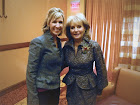
Throughout the years I have gotten a lot of comments from people about my appearance. Usually, it's about my hair and it's not really a compliment. It's more of a "Oh, your hair looks like a bowl or how much hairspray DO you use?"

Unfortunately, I don't have someone here at the station putting on my make-up and fixing my hair everyday, so I appreciate the feedback~ even when it's a little strange. I just had to share a letter I got today from a viewer. I got some bad news this morning and was a little down in the dumps when I showed up to work. Then, I saw I had a letter. How exciting!

Dear Jen,
You are a very talented girl and I watch you often. (Isn't that sweet? )
I love your new hair style and it is such an improvement over the straight hair that made your face and neck resemble a broom handle.
Happy Rails,
Carroll

My new nickname at the station is Swiffer! I hope this brightened up your day! We laughed so hard we started crying!

Thanks to Photographer Gil McIntire for snapping these shots of my hair for the out-of-towners-Too funny! What a day!


-NewsAnchorMom Jen

Methodist Medical Center's new online healthcare program, MyMethodist eHealth, is a proud sponsor of this blog post. MyMethodist eHealth is the secure link to your doctor's office that lets you request appointments, order prescription refills, update your personal health record, and more. Sign up for MyMethodist eHealth here.

Monday, November 3, 2008

Are violent video games really that bad?

My kids don't have any video games at this point. My oldest is five-years-old. He does talk about them. However, the popular video games-even for his age-are violent. They are mainly killing the enemy-Bad vs. Good guys. My son does know about video games. His friends have some. I am sure there are some learning video games for his age that would benefit him, but those aren't the ones he wants-of course!

From ABC: A new study links violent video games to aggressive behavior in children and adolescents. Researchers found students who played violent games at the beginning of the school year grew more physically aggressive as the year wore on. Currently, 90 per cent of American children play some sort of video or computer games in their homes, and these games often depict physical fights, even homicides.

In fact, one study found violence in 9 out of 10 computer games rated appropriate for 10 year-olds. New research suggests all this exposure to violence in video games can make kids more aggressive. Psychologists from the U.S. and Japan studied more than 1600 school-aged children and teenagers over the course of a year. They found that students who played the most violent games at the start of a year were more likely to say they had been in fights, hit, or kicked someone by the end of the year.

The more often kids played the violent games, they more likely they were to show aggression. Researchers say the findings show violent games don't just attract aggressive kids - they actually have the power to make kids more violent. They suggest setting more limits on acceptable levels of physical violence and killings in children's games.

Source: published in Pediatrics by researchers from Iowa State, National Institute of Media in the Family, Minneapolis and Tokyo, Japan

Do your kids have video games? Are there video games out there for older kids that aren't violent?

-NewsAnchorMom Jen

Methodist Medical Center's new online healthcare program, MyMethodist eHealth, is a proud sponsor of this blog post. MyMethodist eHealth is the secure link to your doctor's office that lets you request appointments, order prescription refills, update your personal health record, and more. Sign up for MyMethodist eHealth here.

Sunday, November 2, 2008

Avoiding Peanut Allergies

I know several of my pediatricians have told me not to give my children peanut butter or peanut products until they are older. That recommendation was based on the fear that my sons could be allergic to peanuts and go into anaphylactic shock. I interview a mom whose daughter has severe allergies to peanuts and eggs.

It was scary to listen to her talk about all the food that contains those ingredients. Her daughter can have a severe reaction from touching a table that used to have peanut butter on it or eating a whole wheat noodle that was made a factory that also makes egg noodles. This new research might change give us an insight on how to try and prevent food allergies, but it is bound to be controversial!

From ABC: New research challenges current medical recommendations to new mothers regarding the risk of peanut allergies in babies. The American Academy of Pediatrics recommends children not be exposed to peanuts until age three to lower their odds of developing an allergy. But a new study finds children not exposed to peanuts at an early age had the greater allergy risk.

Peanut allergies are on the rise in many developed countries, but researchers have yet to pin down the reasons why. One popular theory is that exposure to peanuts at a young age may cause a child's immune system to over-react and thus trigger the allergy. But new research challenges that theory, suggesting avoiding peanuts could even be raising children's allergy risk.

Researchers compared Jewish school children in Israel to Jewish school children in Great Britain, reasoning they should have similar genetics and similar economic backgrounds. But the two groups differed greatly on peanut eating - 69% of Israeli children had tried peanuts by the age of 9 months, compared to 10% of those in the UK.

And it was the Israeli children who had the lower chance of peanut allergy. Overall, kids who avoided peanuts in infancy were 10 times as likely to develop an allergy as those who were exposed to peanuts.

Experts suggest that future studies should test whether peanut consumption in infancy can reliably lower allergy risk.

Source: published in the Journal of Allergy and Clinical Immunology

So this makes me wonder what parents are supposed to do. There seems to be no clear cut answer as to what is causing this surge in peanut and other allergies. When did you first feed your child peanut products/eggs?

-NewsAnchorMom Jen

Methodist Medical Center's new online healthcare program, MyMethodist eHealth, is a proud sponsor of this blog post. MyMethodist eHealth is the secure link to your doctor's office that lets you request appointments, order prescription refills, update your personal health record, and more. Sign up for MyMethodist eHealth here.

Bisphenol A not safe again!

Mommy instinct prevails! Most of you were not convinced bisphenol A is safe in baby bottles and other plastic even though the FDA said otherwise. Now, the U.S. Food and Drug Administration is changing its tune.

From the Washington Post: A U.S. Food and Drug Administration advisory panel agreed Friday that the agency had erred in August when it said that a chemical widely used in baby bottles and other plastic packaging for foods and beverages posed no health risks.

On Wednesday, a panel of toxicology experts said the FDA hadn't properly assessed the potential health risks posed by the chemical bisphenol A (BPA), which some studies have linked to cancer, diabetes, heart disease and developmental delays in children. The toxicologists said the FDA had relied too heavily on studies funded by the chemical industry to make its decision, and had failed to consider other studies that questioned the safety of BPA.

The panel of toxicologists had been convened by the FDA after the agency ruled that BPA was safe at current exposure levels -- a stance that prompted criticism from some lawmakers and consumer groups. On Friday, the FDA's Science Board, which consists of scientists from academia, government and industry and advises the FDA commissioner, seconded the toxicologists' concerns about the FDA's August ruling. The issue will now go to FDA Commissioner Dr. Andrew von Eschenbach. It's unclear how the FDA might respond, the Washington Post reported.

"Let me be clear: There's no shame for having" your hypothesis disproved, von Eschenbach said during Friday's session, referring to BPA without mentioning it by name, the Dow Jones news service reported.

The FDA's position on BPA has been controversial because it contradicted more than 100 studies, as well as a finding by the U.S. National Toxicology Program, that there was "some concern" that BPA may affect the brain and behavioral development in fetuses, infants and small children, the Post said.

Norris Alderson, associate commissioner for science at the FDA, toldDow Jonesthat the agency will probably start research early in 2009 to determine the toxic effects of BPA on babies less than 1 month old. Babies are considered the most susceptible group to BPA's effects. It's unclear when those studies would be done, the news service said.

In September, a study published in the Journal of the American Medical Associationsaid that people with high levels of BPA were more likely to have heart disease, including heart attack, or diabetes. High BPA levels increased the risk for these diseases by 39 percent, the researchers reported. To learn more about BPA, visit Environment California.

SOURCES: Hugh S. Taylor, M.D., director of the Division of Reproductive Endocrinology and Infertility, and professor of obstetrics and gynecology, Yale University School of Medicine, New Haven, Conn.; American Chemistry Council, news release, Oct. 31, 2008;Washington Post;Dow Jones

From what I know about this, this is unacceptable. The reason the FDA was looking into bispehol A in the first place is because of those 100 or so studies. So why in the world didn't they look at those studies before saying it was safe? There is no excuse for this. The evidence was there the first time. Why did they do such a poor job assessing the information that existed? Were they just in a hurry or what? I don't like this. If anyone has some insight for me, please share!

-NewsAnchorMom Jen


Methodist Medical Center's new online healthcare program, MyMethodist eHealth, is a proud sponsor of this blog post. MyMethodist eHealth is the secure link to your doctor's office that lets you request appointments, order prescription refills, update your personal health record, and more. Sign up for MyMethodist eHealth here.

 
Template by lollybloggerdesigns. Design by Taylor Johnston.